.png&w=1920&q=75)


SAP ERP implementation is not just an IT project; it’s a business transformation project. SAP implementation usually involves multiple interdependent phases: Project Preparation, Explore, Realization, Cutover and Hypercare. It’s a multi-faceted journey that requires smooth coordination among IT, business stakeholders, and functional specialists.
SAP implementation complexity can be effectively managed with the correct methodology, a skilled team, and robust change management practices.
SAP applications are the digital core of business today, driving sales, finance, supply chain, operations, purchase, and HR. CEOs, CIOs, and business executives invest significant time and money in implementing SAP processes. While not every implementation achieves its full potential, each one offers valuable insights and opportunities for improvement.
The takeaway? Success in SAP ERP implementation is never accidental—it’s engineered through clear strategy, stakeholder alignment, and expert execution.
What is SAP Implementation?
SAP implementation involves deploying SAP software to streamline and optimize a company’s operations across key functions, including sales, production, supply chain, finance, and more. It typically refers to deploying SAP’s ERP system but can also encompass other SAP offerings. Each implementation is unique; it’s customized specifically to suit your company’s requirements and processes.
Driving Business Value Through SAP
Implementing SAP streamlines processes, unifies data, and boosts visibility across operations.
SAP system examples span across various functions, including:
| Module | Primary Function | Business Impact |
|---|---|---|
| Financial Accounting, RTR, OTC, PTP, PTS, HTR | Financial data management and reporting | Real-time financial visibility and compliance |
| Sales & Distribution (SD) | Order management and customer relationships | Enhanced customer experience and sales efficiency |
| Enhanced customer experience and sales efficiency | Procurement and inventory control | Optimized supply chain operations |
| Production Planning (PP) | Manufacturing and capacity planning | Improved production efficiency |
Key Business Gains with SAP ERP
When you implement SAP, the benefits extend across the entire organization, streamlining operations, improving visibility, and driving more intelligent decisions. Here are the key benefits:
Improve Operational Efficiency: Leverage SAP to automate your critical processes, minimize manual intervention, and remove errors, thus driving accuracy and productivity in all functions.
Gain Real-Time Visibility: Get real-time information for faster responses and smarter decision-making in fast-evolving market landscapes.
Simplify Reporting: Automated, reliable reports save time and enable your teams to be more strategic.
Forecast with Confidence: Leverage predictive analytics to understand trends and make smart, informed, and data-driven decisions.
Strengthen Cybersecurity: Advanced security capabilities and compliance solutions safeguard sensitive information and maintain regulatory compliance.
Enable Smarter Decisions: A combined data platform delivers a single source of truth for an informed, organization-wide strategy.
Enhance Collaboration: Integrated functions and shared data break down silos, enabling improved cross-team alignment.
Scale with Agility: SAP ERP’s modular design lets you scale effortlessly, adding capabilities as your business grows and adapts to new demands.
Adopt Intelligent Technologies: New SAP solutions integrate AI, ML, and IoT to automate processes and deliver more informed insights.
SAP Implementation Methodology: Your Guide to Success
A practical ERP implementation approach guarantees on-time delivery of projects within budget, with minimal interruption. SAP offers an organized approach, primarily through its SAP Activate methodology and its older ASAP approach.
This flexible framework aligns with SAP’s global implementation methodology best practices, ensuring flexibility and the immediate realization of value.
SAP Implementation Phases: A Proven Approach with SAP Activate
The success of any ERP implementation plan hinges upon meeting specific requirements. We’ll dive into these.
Discovery
This first phase is all about learning the business environment, determining objectives, and evaluating overall readiness for SAP implementation. By using SAP Signavio, organizations gain access to prebuilt, standard best-practice process maps that can be easily adapted to their specific operations. Not only do this process models speed up the discovery stage, but they also allow collaborative process design, aligning current workflows with SAP’s capability from the beginning.
For instance, a manufacturing unit would chart departments such as production and sales, detail steps like raw material purchasing and manufacturing planning, and dictate rules like compulsory purchase requisitions. Also documented are custom workflows and necessary improvements for smooth implementation and correspondence.
Project Preparation
Establishes the foundation through detailed planning, bringing the correct team together, and establishing the first system environment to ensure consistency and definition.
Explore
In this stage, the solution is tested against business needs, and it is identified where there are any gaps to ensure the suitability of the system as proposed.
Realization
Involves configuring, building, and thorough testing against the completed design to make sure functionality matches business requirements.
Cutover and Go-Live
Marks the transition from old systems to SAP, encompassing data migration, final system checks, and going live in the production environment.
Hypercare
Provides intensive support post go-live, addressing issues, stabilizing the system, and ensuring seamless user adoption and operational continuity.
SAP Implementation Best Practices
SAP implementation is a strategic business transformation that requires deep business insight, active stakeholder engagement, and effective change management to ensure lasting success.
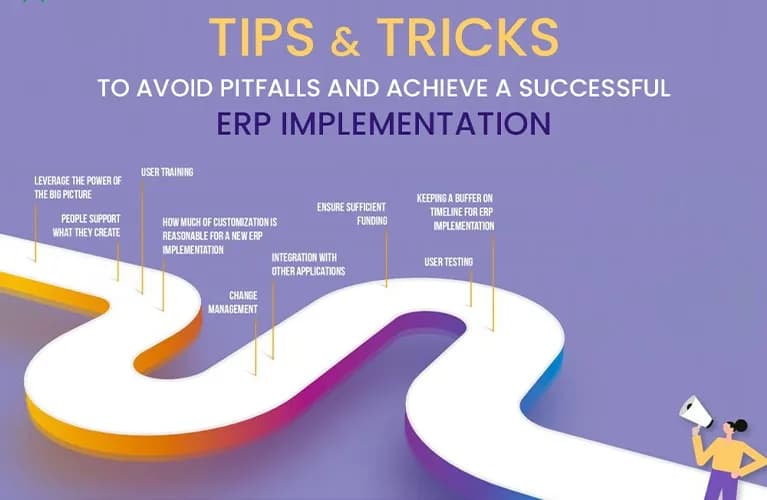
Hire an SAP Advisory Consultant Early: Their guidance is priceless in scope definition and risk avoidance.
Get Executive Sponsorship: Top-down sponsorship speeds up decision-making.
Customize Strategically: Don’t over-customize unless necessary.
Put Data Quality First: Bad data can ruin the whole project.
Perform Ongoing Testing: Early and regular testing avoids costly late-stage failures.
To support these practices, organizations tend to leverage SAP implementation tools, such as SAP Solution Manager and SAP ALM for documentation, monitoring, and lifecycle management.
Selecting Appropriate SAP Implementation Tools
Several tools help implement, configure, monitor, and manage projects:
| Tool | Purpose |
|---|---|
| SAP Solution Manager | End-to-end project monitoring and process testing |
| SAP Best Practices Explorer | Predefined templates for faster deployment |
| SAP Signavio | SAP best practices, including country and industry solutions |
| SAP Fiori | Enhanced user experience and mobile readiness |
Common SAP Implementation Challenges and Solutions
| Challenge | Solution |
|---|---|
| Scope Creep | Use change management protocols and regular stakeholder reviews |
| Data Migration Errors | Conduct thorough data cleansing and validation. |
| User Resistance | Implement robust training and change management initiatives. |
| Integration Issues with Legacy Systems | Use middleware tools and APIs for smoother connectivity. |
| Budget and Timeline Overruns | Follow agile practices and enforce milestone-based progress tracking. |
A program team, together with an SAP consultant, helps organizations navigate these obstacles, ensuring the system delivers promised business outcomes.
Korcomptenz: Your Edge in SAP Solutions
- 20+ years of ERP implementation expertise
- Deep industry focus across Manufacturing, Retail, Automotive, Pharma, and CPG
- Guaranteed seamless transition to SAP S/4HANA
- Proven success in SAP and Microsoft Dynamics 365 implementations and migrations
- Specializing in RISE with SAP and GROW with SAP programs
- Agile and responsive to changing market requirements as well as risk scenarios
- SAP on Azure Partner and Direct Cloud Solution Provider (CSP) for AWS
- Strong track record in complex integration and tailored customizations
Final Thoughts
SAP implementation is not just an IT initiative; it’s a business transformation. When done right, with the correct methodology, tools, and support, it has the potential to unleash tremendous value.
From real-time analytics and increased efficiency to global standardization, an effective SAP implementation can revolutionize the way you operate and compete.
As businesses endeavor to thrive in the digital economy, collaborating with an SAP advisory consultant can help you access innovative SAP solution platforms, including the SAP Suite for Public and Private Clouds, which facilitate agility, scalability, and intelligent business transformation.
If you are implementing SAP, now is the time to move forward. The future of business is bright, connected, and driven by SAP. Contact us for a free consultation today!

Successful SAP implementation depends on structured execution without disrupting the business. See how Korcomptenz completed a multi-plant SAP carve-out with zero downtime—cutting data validation time by 50% and improving process efficiency by 30% across a 24-plant chemical environment.