.png&w=1920&q=75)


DEVeloper + OPerationS
According to Microsoft, A compound of development (Dev) and operations (Ops), DevOps is the union of people, process, and technology to continually provide value to customers. Microsoft Azure DevOps Services supports a collaborative culture and set of processes that bring together developers, project managers, and contributors to develop software. It allows organizations to create and improve products at a faster pace than they can with traditional software development approaches.
Is DevOps a technology?
What does DevOps mean for teams? DevOps enables formerly siloed roles—development, IT operations, quality engineering, and security—to coordinate and collaborate to produce better, more reliable products. By adopting a DevOps culture along with DevOps practices and tools, teams gain the ability to better respond to customer needs, increase confidence in the applications they build, and achieve business goals faster.
DevOps and the application lifecycle
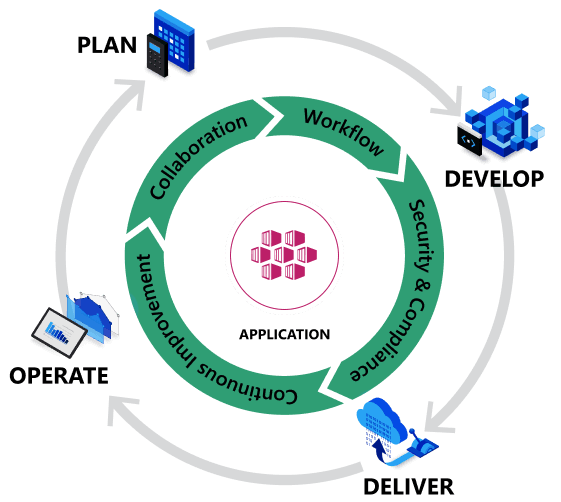
DevOps influences the application lifecycle throughout its plan, develop, deliver, and operate phases. Each phase relies on the others, and the phases are not role specific. All these four phases are closely integrated, with automation and collaboration between the development and operations teams to ensure that the application is delivered quickly, reliably, and efficiently.
The Role of each Phases:
Planning: This phase involves collaboration between development and operations teams to define the requirements for the application and plan the development process. The goal is to align the application with business goals and ensure that it will meet the needs of the users.
Development: The development team writes and tests the code, and then creates a build of the application that is ready to be deployed. This phase also includes version control, continuous integration, and automated testing. Development team may also use Agile methodologies and practices to ensure a continuous flow of work and deliver features and updates rapidly.
Operations: The application is deployed to the production environment, where it is monitored and maintained. This phase includes continuous monitoring, logging, and alerting, as well as incident management. The operations team is also responsible for ensuring the availability, scalability, and security of the application.
Delivery: This phase includes continuous delivery and deployment, as well as testing and validation. The goal is to ensure that the application is deployed quickly and reliably, with minimal downtime. This phase also includes the release management process. The delivery team ensures that the application is deployed to the correct environments and that the correct version of the application is deployed.
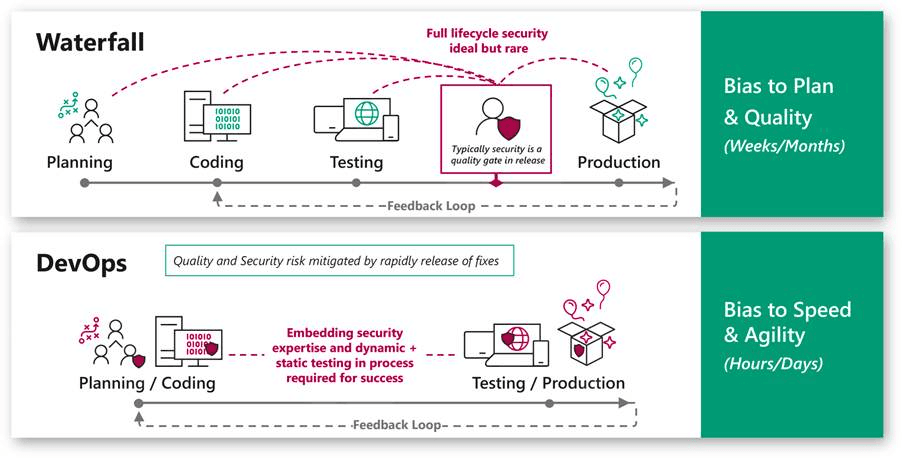
Role Of Security In Development
The benefits of DevOps
- Accelerating time to market
- Adapting to the market and competition
- Maintaining system stability and reliability
- Improving the mean time to recovery
Teams that adopt DevOps culture, practices, and tools become high performing, building better products faster for greater customer satisfaction.
DevOps culture
- Collaboration, visibility, and alignment
- Shifts in scope and accountability
- Shorter release cycles
- Continuous learning
While adopting DevOps practices automates and optimizes processes through technology, it all starts with the culture inside the organization—and the people who play a part in it.
Understanding DevSecOps
What is DevSecOps?
DevSecOps is the evolution of DevOps, where developer, security, and operations teams are united around the culture of security as a shared responsibility.
Developer + Security + Operations
A compound of development (Dev), security (Sec), and operations (Ops), DevSecOps is the union of people, process, and technology to foster a culture of continually providing value and consistent security to customers.
How Does DevSecOps work?
- Code development: Developers write and test code and integrate security testing tools into their workflow. This helps to identify and fix vulnerabilities early in the development process.
- Code review: The code is reviewed by security teams and other stakeholders to identify any potential security risks or compliance issues.
- Testing: The code is tested for vulnerabilities and compliance issues, using both manual and automated testing methods. This includes static and dynamic analysis, penetration testing, and security scans.
- Deployment: The code is deployed to a staging environment for further testing and validation. Once it is deemed safe, it is deployed to production.
- Monitoring: Security teams monitor the software in production for any issues or breaches. They use security information and event management (SIEM) tools to collect and analyze security-related data and act accordingly.
- Continuous improvement: Security teams and developers work together to continually improve the software's security over time. They incorporate new tools and best practices and identify areas for improvement.
By following this workflow, organizations can ensure that security is integrated into the software development process from the beginning, and that vulnerabilities are identified and fixed quickly. This helps to reduce the risk of security breaches and keep the software secure and compliant.
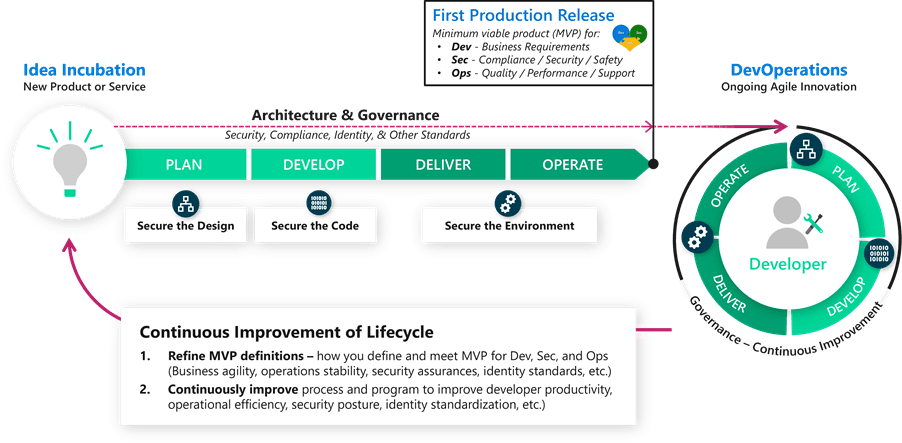
DevSecOps - Sustaining security while you innovate
Technologies used under DevSecOps
Technology plays a key role in enabling DevSecOps and implementing it effectively. Some of the technologies that are commonly used in DevSecOps include:
- Automation tools: Automation tools, such as continuous integration/continuous deployment (CI/CD) platforms, are used to automate the software development and deployment process. This allows developers to deploy code changes quickly and easily, ensuring that security tests are run automatically.
- Security testing tools: Different types of security testing tools are used at different stages of the software development process. For example, static code analysis tools can be used to identify vulnerabilities in the code, while dynamic analysis tools can be used to test the software during runtime.
- Containerization and orchestration: Containerization and orchestration technologies, such as Docker and Kubernetes, are used to deploy and manage the software in a secure and consistent manner. This helps to ensure that the software is running in a controlled environment, and that it can be easily scaled and managed.
- Vulnerability management: Vulnerability management tools can be used to identify, prioritize, and track vulnerabilities in the software. This allows organizations to quickly identify and fix vulnerabilities before they can be exploited by attackers.
- Security Information and Event Management (SIEM): SIEM tools are used to collect and analyze security-related data from various sources, such as logs, network traffic, and alerts. This helps organizations to detect and respond to security incidents quickly and effectively.
The benefits of DevSecOps
Teams that adopt DevSecOps culture, practices, and tools improve observability, strengthen security at early stages in application development, and proactively remediate vulnerabilities.
- Accelerating time to market
- Provide the necessary controls for compliance and security
- Uncover vulnerabilities earlier
- Improving the mean time to recovery
Final Thoughts
DevOps and DevSecOps aims to improve the speed, quality, and reliability of software delivery. Both have the potential to bring significant benefits to organizations, including faster delivery, improved quality, increased agility, and greater reliability. By adopting these approaches, organizations can improve their ability to deliver software and services that meet the needs of their customers and stay competitive in the market. Feel free to contact us for a free consultation. Please send your inquiries to [email protected].

The impact is profound when technology decisions improve security and operational stability at the same time. See how Korcomptenz migrated a global nonprofit to Azure—achieving 99.9% uptime, 40% cost savings, and stronger security with modern collaboration.