 ChatGPT
 Claude
 Perplexity
 Google AI
 Grok
Grok
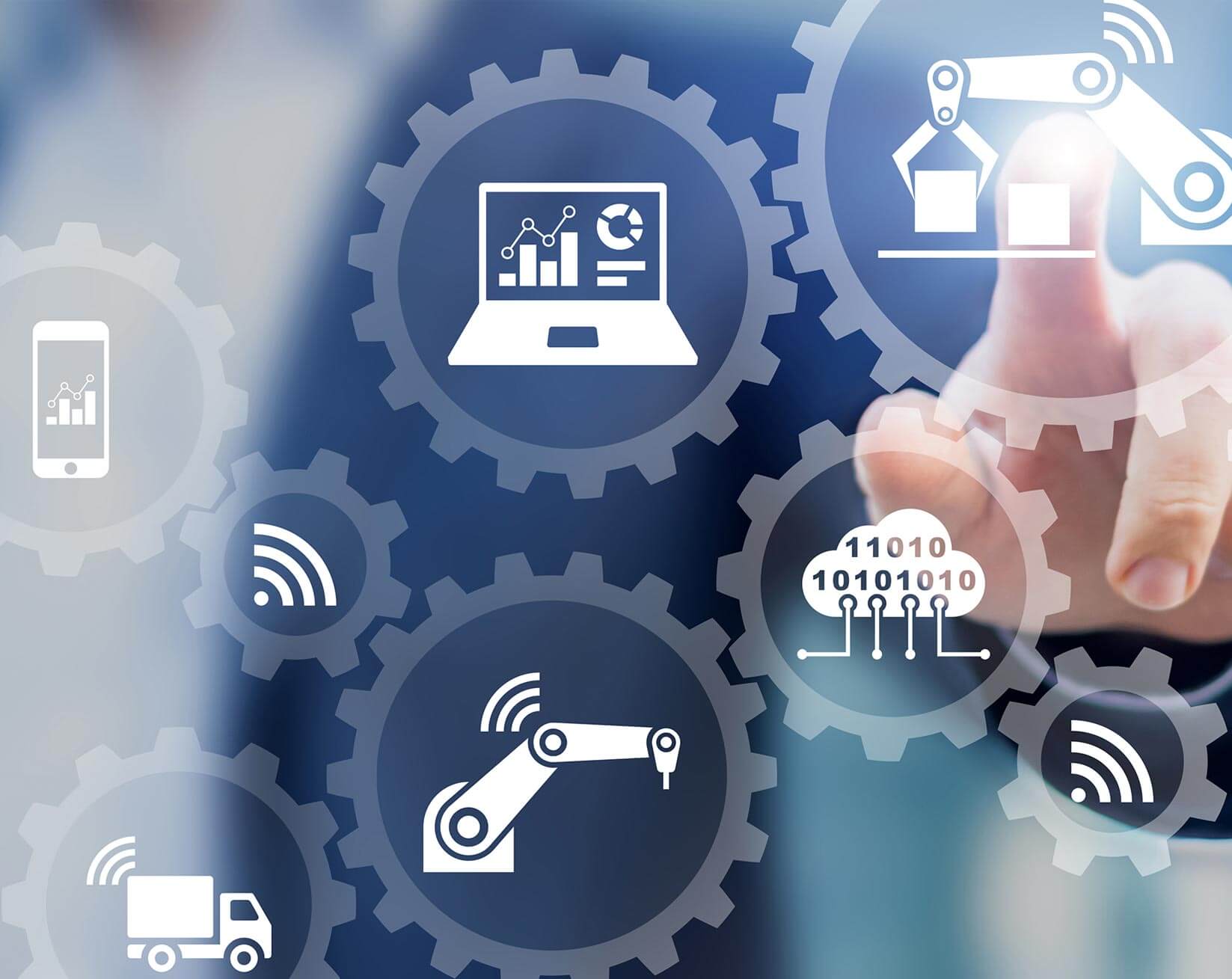



By understanding the principles of ERP vs CRM, and how these platforms can come together to drive scalable transformation, business leaders can significantly boost productivity and unlock growth. When evaluating CRM vs ERP, a business is not just making a technical decision; rather, it is making a strategic choice about how the organization scales operations, serves customers, as well as drives profitability.
To understand the ERP system vs CRM, it’s essential to first define each concept clearly.
ERP: An ERP system is a comprehensive software solution that integrates core internal business processes — finance, human resources, procurement, inventory, supply chain, order management, and more — into a unified system.
CRM: A CRM platform is software built to manage customer-facing activities — sales, marketing, customer service, support, and engagement — by capturing and organizing customer interactions, buying behavior, and communication history.
In effect, ERP deals with the “back-office” operations, while CRM handles the “front-office” interactions.
Here is a side-by-side comparison highlighting ERP vs CRM differences across key business dimensions:
| Area / Dimension | ERP (Enterprise Resource Planning) | CRM (Customer Relationship Management) |
|---|---|---|
|
Primary Focus |
Back-office operations — finance, inventory, HR, procurement, supply chain. |
Front-office operations — sales, marketing, customer service, support. |
|
Core Users |
Finance, operations, supply chain, production, HR |
Sales teams, marketing, customer support, and account management |
|
Typical Benefits |
Process standardization, resource planning, cost control, and unified data across departments |
Better customer data, lead management, improved customer retention, and personalized service |
|
Complexity & Scope |
Broad, enterprise-wide, and often complex to implement |
Narrower scope, easier to adopt, and quicker to deploy |
|
Ideal Business Use Cases |
Businesses with complex operations, multiple departments, supply chain, manufacturing, finance, and inventory needs |
Businesses with strong customer interaction, sales-driven growth, need for customer insights |
These distinctions reflect the difference between CRM and ERP in purpose, scope, and value drivers.
Despite the differences, ERP and CRM systems share essential commonalities. Recognizing ERP vs CRM similarities helps decision-makers understand why many businesses eventually deploy both.
Centralized data repository: The systems aim to break down silos. They centralize information, ensuring teams across finance, operations, sales, as well as service have access to consistent, up-to-date data.
Improved operational efficiency: Whether automating back-office workflows or streamlining sales pipelines, both ERP and CRM improve productivity and reduce manual overhead.
Enhanced reporting and insights: Both systems support analytics — for business operations via ERP, and customer behavior via CRM — enabling leadership to make data-driven strategic decisions.
Centralized data repository: The systems aim to break down silos. They centralize information, ensuring teams across finance, operations, sales, as well as service have access to consistent, up-to-date data.
This overlap also creates a compelling case for integration — combining ERP and CRM can unlock benefits that neither can deliver alone.
Evaluating an ERP system vs CRM, or choosing to deploy both, depends on business needs, maturity, and growth plans. Below is a guidance matrix:
| Scenario / Business Need | Recommended Approach |
|---|---|
|
Early-stage business focused on acquiring customers, building relationships, marketing, and growing the sales pipeline |
CRM first — to manage leads, customer data, interactions, and support customer acquisition and retention efforts. |
|
Company with complex operations: inventory, supply chain, procurement, HR, finance — aiming for efficiency, cost control, and process standardization |
ERP first — to unify internal operations, manage resources, financials, compliance, and streamline workflows. |
|
Business is growing rapidly with both operational complexity and a growing customer base |
Deploy both ERP and CRM (integrated) — to ensure internal operations and customer-facing processes run in sync. |
|
An enterprise with global operations, multiple departments (manufacturing, sales, service), and a need for unified data and seamless customer experience |
Integrated ERP + CRM — to provide a full 360⁰ view from operations to customer lifecycle, enabling scalability and agility. |
Relying exclusively on either ERP or CRM can introduce limitations:
Thus, the difference between ERP and CRM is not just functional — it also impacts strategic alignment, operational agility, and customer centricity.
Increasingly, enterprises see value not in assessing CRM vs ERP, but in integrating both. Integrated ERP–CRM delivers collective benefits:
For businesses seeking both growth and stability — especially mid-size to enterprise-level firms — this integrated model often delivers the best return on investment.
When evaluating ERP vs CRM (or both), leadership should weigh:
Business complexity and scope — Are operations simple or multi-faceted (production, inventory, finance, HR, supply-chain)? If multi-faceted, ERP becomes a priority.
Customer interaction intensity — Do you have a large, active customer base that needs ongoing support, marketing, and sales pipelines? Then CRM is essential.
Growth trajectory — Rapid growth demands scalable solutions. Integrated ERP + CRM supports scaling across departments without friction.
Budget and implementation readiness — ERP implementations tend to be more resource-intensive than CRM. For quick wins, CRM may deliver early benefit.
Strategic priorities — If your priority is customer acquisition and retention, CRM offers direct value. If operational efficiency, compliance, as well as resource optimization are key, ERP holds strategic weight.
Long-term vision — Consider whether you want separate optimized silos or an integrated system that aligns every department toward unified business goals.
As you assess CRM vs ERP, clarity on these dimensions will guide a more objective, ROI-driven decision.
The debate over ERP vs CRM is not about which is better — it is about what your business needs today, and where it is headed tomorrow. A CRM offers powerful tools to nurture relationships, manage pipelines, and deepen customer loyalty. An ERP brings order to operations, unifies resources, and streamlines internal workflows. When integrated smartly, they enable operational excellence and exemplary customer experiences in tandem.
For decision-makers assessing ERP vs CRM differences, the wise path is to align system choice with business complexity, customer engagement, growth ambitions, as well as long-term strategy.
By carefully evaluating your business’s context and goals, you can adopt the optimal technology stack — and unlock a competitive advantage that spans both efficiency and customer delight.
Unify operations and improve customer relationships to accelerate measurable growth. Contact us today!

ERP governs internal business operations such as finance, procurement, and supply chain, while CRM focuses on customer relationships, sales pipelines, marketing, as well as service interactions. Together, they create complete operational visibility.
Integration removes data silos, enhances forecast precision, and enables seamless quote-to-cash execution. It combines efficient back-office operations with customer-facing excellence to drive united growth and better decision-making.
It depends on the priorities. Certainly, businesses with a focus on customer acquisition should implement CRM first. Organizations with complex operational workflows, financial controls, and supply chains should implement ERP first.
Relying on a single system can result in fragmented data, manual processes, limited visibility, and poor collaboration. Distinct systems increase operational risks and reduce customer responsiveness.
Unified systems make customer, inventory, and financial information available in real-time. This facilitates order management efficiency, accuracy of service, quicker responses, better planning, and greater customer satisfaction to ensure profitability.
Use AI to summarize this article


| Cookie | Duration | Description |
|---|---|---|
| cookielawinfo-checkbox-analytics | 11 months | This cookie is set by GDPR Cookie Consent plugin. The cookie is used to store the user consent for the cookies in the category "Analytics". |
| cookielawinfo-checkbox-functional | 11 months | The cookie is set by GDPR cookie consent to record the user consent for the cookies in the category "Functional". |
| cookielawinfo-checkbox-necessary | 11 months | This cookie is set by GDPR Cookie Consent plugin. The cookies is used to store the user consent for the cookies in the category "Necessary". |
| cookielawinfo-checkbox-others | 11 months | This cookie is set by GDPR Cookie Consent plugin. The cookie is used to store the user consent for the cookies in the category "Other. |
| cookielawinfo-checkbox-performance | 11 months | This cookie is set by GDPR Cookie Consent plugin. The cookie is used to store the user consent for the cookies in the category "Performance". |
| viewed_cookie_policy | 11 months | The cookie is set by the GDPR Cookie Consent plugin and is used to store whether or not user has consented to the use of cookies. It does not store any personal data. |