 ChatGPT
 Claude
 Perplexity
 Google AI
 Grok
Grok




Customer expectations have evolved faster than most organizations’ ability to respond. Growth now depends on how well a business understands its customers, anticipates their requirements, and delivers value at the right moment. This is where understanding what is CRM software is becoming essential—not as technology alone, but as a strategic discipline that aligns sales, marketing, and service around a unified insight. The long-term benefits of CRM are clear: stronger relationships, better forecasting, and a sharper competitive edge.
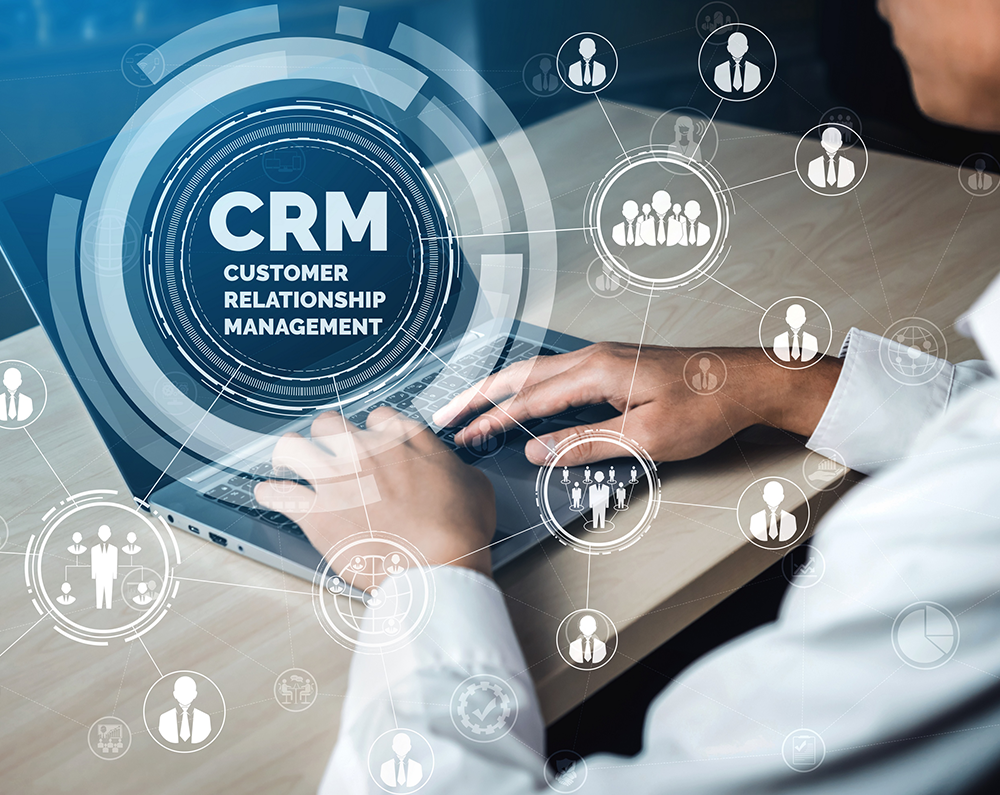
Customer relationship management (CRM) is both a business strategy and a technology platform. A modern CRM equips organizations to extract greater value from each client interaction—no matter who the team engages with the customer. It unifies customer data, so marketing, sales, and support teams work seamlessly, eliminating the need for customers to repeat information.
A CRM platform captures every detail tied to a customer, from billing and purchases to service requests and every interaction—providing complete visibility into the relationship. With built-in automation, analytics, and reporting, businesses can uncover trends, evaluate engagement levels, increase sales effectiveness, and deliver support that feels proactive rather than reactive.
When you assess deploying CRM, it’s critical to understand the breadth of CRM benefits. These are not just incremental improvements—they can be strategic enablers. Among the most pertinent are:
| Organizational function | Key Business Application | CRM Benefit |
|---|---|---|
|
Sales |
Lead prioritization and pipeline tracking |
Higher conversion, faster cycle times |
|
Marketing |
Segmentation, campaign-response analysis |
Better targeting, improved ROI |
|
Customer Service / Support |
Full customer context across channels |
Reduced churn, higher satisfaction |
|
Executive / Strategy |
Dashboards, insights, customer lifetime value |
More data-driven decisions, performance clarity |
Businesses need to get a clear understanding of the types of CRM software available. In broad terms, three core categories define the landscape:
Operational CRM – Designed to automate customer-facing processes, including sales force automation, marketing automation, and service workflows.
Analytical CRM – Focused on transforming customer data into insights through segmentation, forecasting, reporting, and customer lifetime value analysis.
Collaborative CRM – It enhances cross-department communication, enabling teams to share customer data and deliver a seamless, more consistent service experience.
AI-enabled CRM helps businesses elevate customer satisfaction by combining AI with traditional CRM capabilities to deliver faster responses and deeply personalized experiences. Predictive analytics is one of the most powerful advancements, analyzing customer behavior and historical data to improve targeting, forecasting, and decision-making.
Selecting the right platform requires aligning technology, usability, cost, and long-term product vision with business goals. Done well, enterprises unlock the true benefits of CRM and maximize the value of a CRM tool as a strategic growth driver.
Understanding CRM benefits is essential—but the real differentiator lies in execution. You need to ask: “How will our organization adopt and embed the system to realize value?” Key strategic considerations include:
Clear objectives: Define what you want to achieve (e.g., increase upsell by X %, reduce service resolution time by Y %).
Data integrity & governance: Unified customer views depend on high-quality, cleaned data and defined roles for data stewardship.
Integration & scalability: A CRM can’t be siloed; it should integrate with other enterprise systems (ERP, BI, marketing automation) to achieve its full impact.
Metrics & continuous improvement: Monitor adoption metrics, usage patterns, pipeline performance, and refine accordingly.
The value of a CRM is realized through disciplined implementation, not just deployment.
Even with clear objectives and a strong plan, enterprises will face CRM challenges. The earlier you recognize them, the earlier you can mitigate them, including the following common ones.
Resistance to Change: Teams may view CRM as additional work, not an enabler.
Poor data quality: Incorrect or fragmented data erodes trust and limits benefit.
Lack of alignment: If sales, marketing, and service work in silos, the CRM becomes disjointed.
Over-customization: Excessive tailoring delays deployments, is more expensive, and reduces resiliency in the future.
Insufficient governance: Without ownership and accountability, usage lags, and ROI suffers.
CRM realizes its true value only when fully integrated, delivering a 360-degree customer view and unified collaboration across teams.
Businesses need to focus on stakeholder alignment, phased deployment, strong data governance, and scalable, minimal customization.
AI-enabled virtual agents use NLP to provide instant support across channels and applications, guiding customers and human agents to faster access to relevant information. When combined with speech-to-text capabilities and conversational intelligence, first-contact resolution as well as service quality can significantly improve.
By integrating with existing CRM platforms, virtual agents enhance routing, self-service, and agent assist workflows—unlocking real-time insights and elevating the benefits of CRM software for customer service.
Here are three real-world use cases for you to consider:
| Industry | CRM Use-Case | Strategic Impact |
|---|---|---|
|
Professional Services Firm |
Use CRM to track client engagements, forecast renewals, and manage referrals. |
Improved revenue predictability, better client retention. |
|
Retail / eCommerce |
Consolidate customer purchase history, automate marketing follow-ups. |
Increased customer lifetime value, cross-sell efficiency. |
|
Manufacturing / B2B |
Use CRM to coordinate sales, service, and channel partners across long-cycle deals. |
Enhanced visibility into customer lifecycle, reduced cycle time. |
|
Healthcare |
Use CRM alongside clinical systems to manage patient engagement, appointment history, outreach campaigns, and personalized follow-up reminders. |
Higher patient satisfaction, reduced no-shows, and stronger continuity of care. |
|
Financial Services & Banking |
Centralize client portfolios, automate advisory workflows, and track compliance documentation. |
Improved advisory productivity, reduced risk, and greater client trust. |
These cases reflect how the CRM benefits can be realized across sectors, not just in pure sales organizations.
Understanding CRM provides a blueprint for how modern organizations create value, loyalty, and profitable growth. When leaders address the challenges of CRM with clarity and foresight, they create the foundation for measurable, lasting progress. The strongest results come from embedding CRM into everyday business rhythms, empowering teams through insight, and prioritizing customer-centric decisions at scale.
With the right systems, governance, and mindset, the CRM benefits become real: better forecasting, higher retention, and a competitive advantage that compounds over time. That opportunity is here: connect your customer data, elevate engagement, and turn intelligence into outcomes.
Customer intelligence is now the currency of growth. Start your CRM transformation today.

CRM centralizes customer data to improve understanding, personalize interactions, and strengthen relationships—helping businesses drive loyalty, smarter engagement, and sustainable revenue growth.
CRM ensures every interaction is informed by complete customer history, enabling faster responses, consistency across teams, as well as proactive support that makes customers feel valued at every stage.
Yes. CRM helps teams prioritize leads, automate follow-ups, analyze buying behavior, and forecast accurately—creating higher conversion rates and greater lifetime customer value.
Definitely. Customer service, finance, operations, and leadership rely on CRM for insights, self-service support, performance tracking, customer analytics, and enterprise-wide decision-making.
Set clear goals, ensure strong data governance, plan user adoption and change management, integrate CRM with key business systems, and align leadership support to achieve long-term value.
Use AI to summarize this article


| Cookie | Duration | Description |
|---|---|---|
| cookielawinfo-checkbox-analytics | 11 months | This cookie is set by GDPR Cookie Consent plugin. The cookie is used to store the user consent for the cookies in the category "Analytics". |
| cookielawinfo-checkbox-functional | 11 months | The cookie is set by GDPR cookie consent to record the user consent for the cookies in the category "Functional". |
| cookielawinfo-checkbox-necessary | 11 months | This cookie is set by GDPR Cookie Consent plugin. The cookies is used to store the user consent for the cookies in the category "Necessary". |
| cookielawinfo-checkbox-others | 11 months | This cookie is set by GDPR Cookie Consent plugin. The cookie is used to store the user consent for the cookies in the category "Other. |
| cookielawinfo-checkbox-performance | 11 months | This cookie is set by GDPR Cookie Consent plugin. The cookie is used to store the user consent for the cookies in the category "Performance". |
| viewed_cookie_policy | 11 months | The cookie is set by the GDPR Cookie Consent plugin and is used to store whether or not user has consented to the use of cookies. It does not store any personal data. |