 ChatGPT
 Claude
 Perplexity
 Google AI
 Grok
Grok



#DrivingExpertLedTransformation
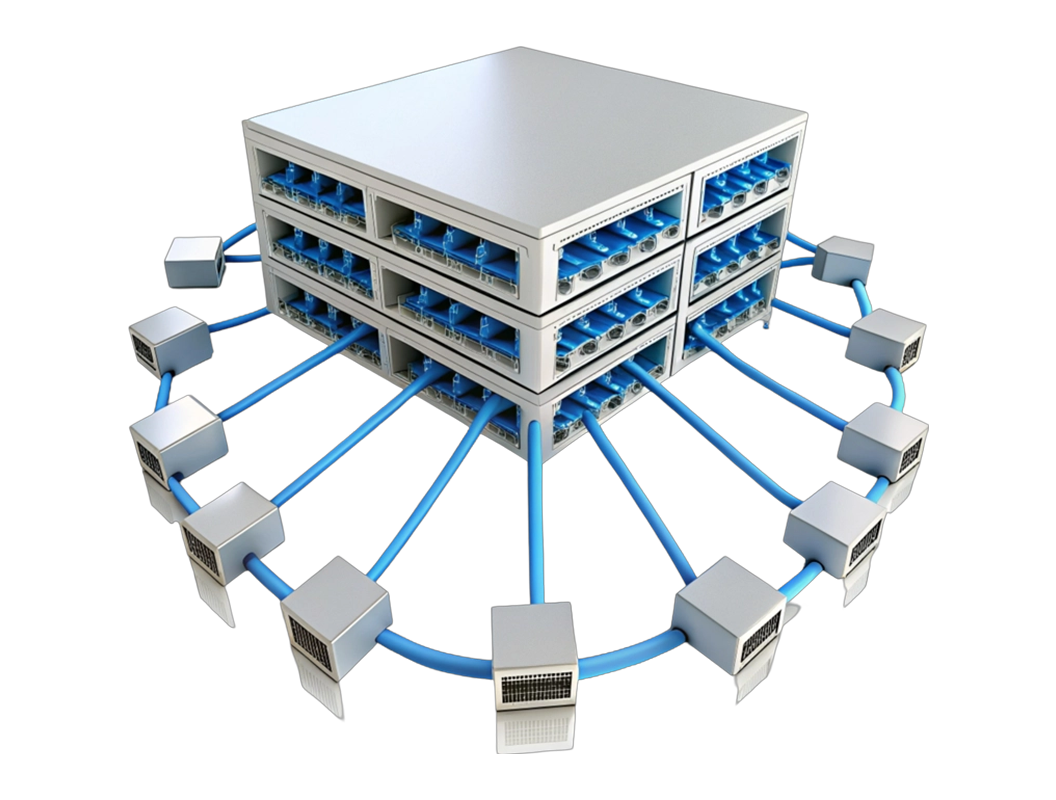

Business models are rapidly changing, competitiveness is increasing, and technology is no longer a purely back-office enabler but has become a core driver of differentiation. The implication for you is clear: adopt and adapt technology not just to catch up but to lead. At the heart of this technological shift is edge computing—the architecture, approach, and mindset that moves compute, storage, as well as analytics closer to where data is generated and action is required.
Latency and responsiveness: By processing data closer to its source, decision-making becomes near real-time. For example, sensors detecting a fault in a machine can trigger automated action locally rather than waiting for a cloud-based round-trip.
Bandwidth and cost reduction: Transmitting less raw data to central cloud systems reduces network burden, cost, and risk. Bringing computation to the network’s edge minimizes the volume of long-distance data exchange required between the client and the server.
Business continuity and resilience: Localized computation means systems can operate even when connectivity is compromised—crucial for remote, mission-critical, or industrial settings.
Data privacy and compliance: By processing data closer to its origin rather than shipping it globally, businesses may better satisfy regulatory or sovereignty requirements.
New revenue and differentiated experiences: Organizations can tap into capabilities like immersive experiences, proactive service models, and edge-enabled products that previously were impractical.
Scalability of distributed intelligence: With the proliferation of IoT, mobile edge computing (e.g., 5G-enabled edge deployment) becomes a lever for scaling automated operations across locations.
| Dimension | Central-Cloud Model | Edge Computing Model |
|---|---|---|
|
Data Processing Location |
Core data centers, potentially far from the data source |
At or near data source (on-site servers, gateways, edge nodes) |
|
Latency |
Higher latency due to travel time |
Significantly lower latency |
|
Bandwidth Consumption |
High, due to the transmission of raw data to the central location |
Lower, since processing happens locally and only filtered data is sent |
|
Dependency on Connectivity |
Heavily dependent on network connectivity |
More resilient—can operate with intermittent connectivity |
|
Use-Case Suitability |
Batch analytics, heavy compute, global consolidation |
Real-time or near real-time decisions, distributed operations |
|
Cost Implications |
Potential for large, centralized infrastructure and wide data transit costs |
Potential for distributed infrastructure and localized cost savings |
|
ata Sovereignty & Privacy |
Data flows widely, which may raise compliance issues |
Data remains closer to the origin, easing compliance risk |
| Industry | Use Case Description | Strategic Outcome |
|---|---|---|
|
Manufacturing |
Smart-factory setup where sensors analyze machine health locally and trigger maintenance automatically |
Reduced downtime, improved asset utilization |
|
Retail |
In-store checkout via connected cameras and sensors, with processing done locally for a real-time customer experience |
Enhanced customer satisfaction, reduced queue times |
|
Healthcare |
Remote patient monitoring devices process data at the device or edge node to alert clinicians instantly. |
Faster clinical response, improved patient outcomes |
|
Transportation & Logistics |
Autonomous vehicle fleets or drones using mobile edge computing to evaluate surroundings and act locally |
Enhanced safety, lower latency, new autonomous models |
|
Smart Cities / Utilities |
Traffic sensors and energy grids use edge nodes to control systems locally and only send aggregated data to the cloud. |
Better service levels, reduced operational costs. |
Identify the right workload: Not every application needs to move to the edge. Evaluate latency sensitivity, data volume, connectivity reliability, and value impact.
Design the architecture: Define how edge nodes, gateways, cloud services, and network connectivity will integrate.
Governance and security: Establish how edge devices will be managed, patched, secured, and audited. Local deployment brings new physical and cyber-risk profiles, with many more distributed endpoints to protect and monitor
Data strategy and monetization: Decide which data is processed locally, which is forwarded, and how insights will be leveraged—locally and globally.
Talent, operations, and ecosystem: Edge introduces new operating models—distributed locations, mobile edge computing nodes, and local teams. Plan accordingly.
Partner and vendor model: Many platforms exist; assess whether an internal build or partner adoption is the best fit.
ROI modelling and phased rollout: Use a pilot-to-scale approach. Quantify expected gains from edge computing benefits such as latency reduction, bandwidth savings, and improved service levels.
Integration with cloud / hybrid environment: Ensure the edge architecture complements your broader cloud estate rather than conflicts with it.
When effectively executed, edge computing becomes a strategic enabler—delivering measurable outcomes rather than just infrastructure changes.
The question is: how many of your mission-critical processes should reside at the edge, and when should you act? The answer lies in recognizing that the future of business demands proximity—proximity of computing to data, of decision to action, of experience to the end-customer.
Bring decisions closer, drive performance further. Schedule a call with us to accelerate with edge innovation.

Use AI to summarize this article



| Cookie | Duration | Description |
|---|---|---|
| cookielawinfo-checkbox-analytics | 11 months | This cookie is set by GDPR Cookie Consent plugin. The cookie is used to store the user consent for the cookies in the category "Analytics". |
| cookielawinfo-checkbox-functional | 11 months | The cookie is set by GDPR cookie consent to record the user consent for the cookies in the category "Functional". |
| cookielawinfo-checkbox-necessary | 11 months | This cookie is set by GDPR Cookie Consent plugin. The cookies is used to store the user consent for the cookies in the category "Necessary". |
| cookielawinfo-checkbox-others | 11 months | This cookie is set by GDPR Cookie Consent plugin. The cookie is used to store the user consent for the cookies in the category "Other. |
| cookielawinfo-checkbox-performance | 11 months | This cookie is set by GDPR Cookie Consent plugin. The cookie is used to store the user consent for the cookies in the category "Performance". |
| viewed_cookie_policy | 11 months | The cookie is set by the GDPR Cookie Consent plugin and is used to store whether or not user has consented to the use of cookies. It does not store any personal data. |