 ChatGPT
 Claude
 Perplexity
 Google AI
 Grok
Grok



#DrivingExpertLedTransformation
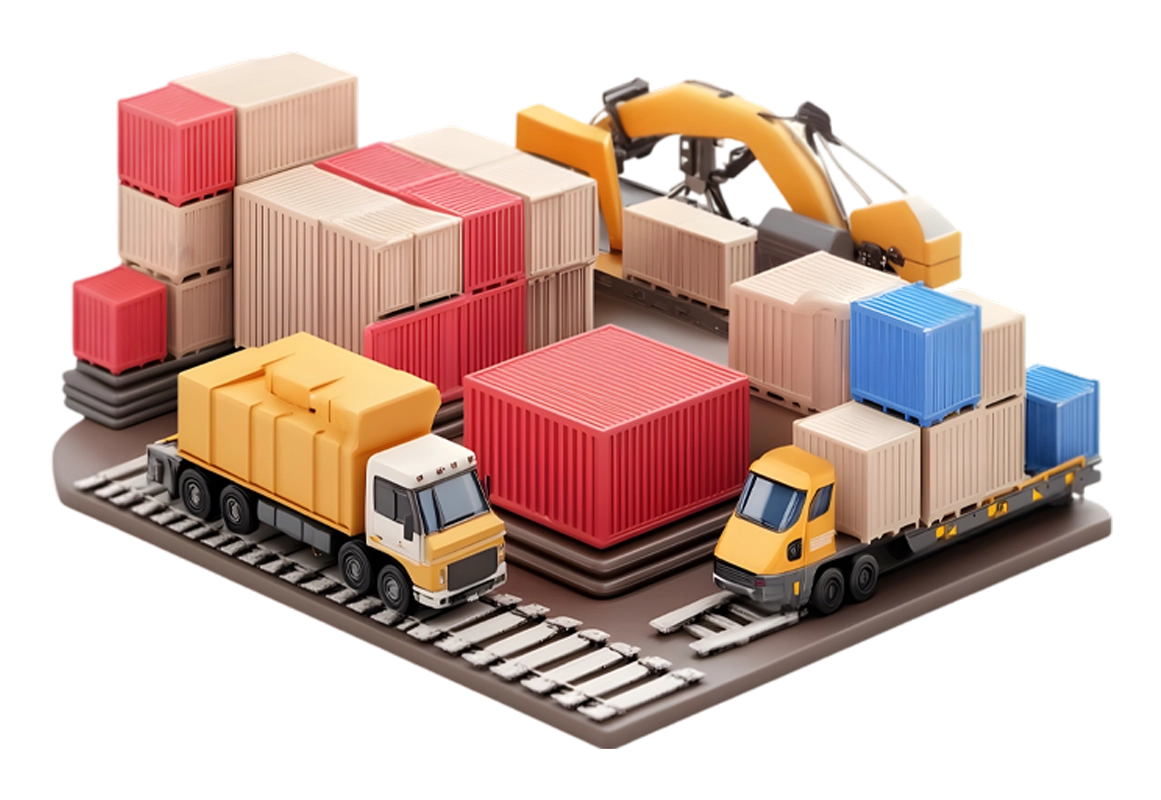

Modern supply chains can no longer tolerate delays, uncertainty, or blind spots. Disruptions from geopolitical shifts to demand swings and logistics bottlenecks spread faster than ever, and organizations that cannot anticipate them risk decisive losses. A simple comparison between a warehouse in 1980’s and one now highlights the transformation. Robotics, AI-driven logistics, intelligent automation, and EDI systems have digitized operations, accelerated processes, minimized errors, and eliminated manual bottlenecks.
Electronic Data Interchange (EDI) has become the central hub for visibility, operational foresight, and agile decision-making across leadership and operations teams.
Supply chains encompass dozens of partners, hundreds of touchpoints, and thousands of data exchanges. Yet, most enterprises still rely on manual processes and siloed systems, often remaining unaware of inventory bottlenecks, shipment delays, or compliance issues until they occur. Without real-time visibility, decision-makers operate with stale information, leading to:
EDI solutions enable automated, standardized data flows such as purchase orders, advance ship notices, invoices, and inventory levels—across internal and external systems. When integrated into a unified visibility dashboard, these core EDI transactions deliver a single source of truth that illuminates the actual status of operations at any given moment.
| Aspect | Warehouse without EDI | Warehouse with EDI |
|---|---|---|
|
Information Flow |
Paper-based documentation with manual entry of orders and invoices. |
Real-time, digital data exchange between systems and partners through EDI. |
|
Order Processing |
Slow, error-prone manual approvals. |
Automated and validated instantly, reducing delays and errors. |
|
Inventory Visibility |
Limited visibility; frequent stockouts or overstocking due to delayed updates. |
Real-time inventory tracking and predictive replenishment using EDI analytics. |
|
Partner Communication |
Manual updates via phone, fax, or mail, prone to miscommunication. |
Seamless, standardized, and secure communication through EDI integration. |
|
Decision-Making |
Based on historical reports with delayed responses. |
Driven by real-time insights and predictive analytics for proactive decisions. |
Anomaly Detection: Machine-learning models analyze historical EDI transaction patterns to flag deviations, such as sudden supplier lead-time increases, triggering early alerts.
Demand Forecasting: Predictive algorithms synthesize order history, market signals, and macroeconomic indicators to optimize production schedules and inventory buffers.
Risk Scoring: Automated risk assessments quantify the reliability of each supplier and logistics partner based on on-time performance and compliance metrics, enabling procurement teams to diversify or renegotiate partnerships proactively.
The result is a predictive operations framework that shifts supply-chain management from reactive fire drills to strategic orchestration—aligning procurement, manufacturing, warehousing, and logistics under a unified, data-driven governance model.
To upgrade EDI from a passive exchange to a predictive engine requires three essential layers:
Real-time EDI streaming & acknowledgments: Modern EDI platforms ensure each transaction (e.g., PO → 850, ASN → 856, Invoice → 810, Functional Acks → 997) is processed with minimal latency, validated, and acknowledged. Any failure or delay becomes instantly visible.
Centralized monitoring and dashboards: An observability layer tracks the status of document flows, error rates, partner performance, and SLAs. Correlating EDI logs, error streams, and transaction metadata helps uncover transmission failures and pinpoint root causes before they cascade into operational disruption.
Many enterprises struggle with decades-old EDI infrastructures, characterized by on-premises translators, custom code patches, and point-to-point integrations that hinder agility. To fully realize visibility and predictive potential, organizations must modernize by:
Migrating to Cloud-Native EDI Platforms: Cloud solutions deliver elasticity, rapid deployment, and continuous innovation—enabling global scale without costly hardware investments.
Adopting API-First Approaches: Hybrid architectures that combine EDI and APIs enable real-time data exchange with digital-native suppliers, supporting advanced use cases such as IoT-driven shipment tracking.
Implementing Integration Platforms (iPaaS): Centralized integration hubs consolidate EDI, API, and event-stream data, simplifying management and accelerating time-to-value.
This modernization roadmap lays the foundation for advanced analytics, ensuring high-frequency data feeds and consistent message standards across ecosystems.
| Use Case | Description |
|---|---|
|
Inventory Optimization & Safety Buffers |
By analyzing lead-time variance captured via EDI acknowledgments and ASNs, the system can dynamically adjust safety stock buffers per SKU and node. Over time, the model converges to a lower carrying cost while maintaining service levels. |
|
Exception Routing & Auto-escalation |
For transactions flagged as anomalous (too-late acknowledgments, missing ASNs, PO mismatches), workflow engines can auto-route exceptions, notify stakeholders, or even invoke alternative logistics routes—all before downstream disruption accrues. |
|
Supplier Health Forecasting |
By monitoring partner performance metrics (document success ratios, late acknowledgments, variance in throughput), the model can flag “at-risk” suppliers well before they break — enabling preemptive sourcing swaps or capacity rebalancing. |
|
Delay Forecasting & Replanning |
When a shipment enroute is forecast to miss a window (based on transport logs and ASN deviations), the system can trigger remedial action: expedite air freight, reallocate inventory from alternate nodes, or adjust order prioritization. |
To deliver on this vision, you must address:
Ensure strict governance, schema validations, and consistent partner mapping. Even a single malformed EDI file can break downstream logic.
Success depends on upstream and downstream partners being capable and willing to support real-time EDI and acknowledgments. Invest in change management and incentives for compliance.
Often, the ERP, WMS, or TMS systems weren’t built to support real-time pipelines. Use middleware, API bridges, or modern EDI platforms to fill gaps.
Avoid “black-box” predictions. Maintain human-in-the-loop review, error explainability, and periodic model audits, especially in mission-critical domains.
Latency, throughput, and exception rates grow with transaction volume. The architecture must be cloud-native or elastic to adapt.
With supply chain disruptions becoming the norm, organizations that embrace predictive visibility gain the foresight to act, adapt, and lead. Modern EDI transforms fragmented operations into connected, intelligent ecosystems that anticipate challenges and drive resilience. Organizations that harness their potential gain not just efficiency, but become more resilient, proactive, and differentiated in a highly competitive supply chain landscape.
Transform your supply chain with predictive EDI visibility. Enable EDI Intelligence with us.

Use AI to summarize this article



| Cookie | Duration | Description |
|---|---|---|
| cookielawinfo-checkbox-analytics | 11 months | This cookie is set by GDPR Cookie Consent plugin. The cookie is used to store the user consent for the cookies in the category "Analytics". |
| cookielawinfo-checkbox-functional | 11 months | The cookie is set by GDPR cookie consent to record the user consent for the cookies in the category "Functional". |
| cookielawinfo-checkbox-necessary | 11 months | This cookie is set by GDPR Cookie Consent plugin. The cookies is used to store the user consent for the cookies in the category "Necessary". |
| cookielawinfo-checkbox-others | 11 months | This cookie is set by GDPR Cookie Consent plugin. The cookie is used to store the user consent for the cookies in the category "Other. |
| cookielawinfo-checkbox-performance | 11 months | This cookie is set by GDPR Cookie Consent plugin. The cookie is used to store the user consent for the cookies in the category "Performance". |
| viewed_cookie_policy | 11 months | The cookie is set by the GDPR Cookie Consent plugin and is used to store whether or not user has consented to the use of cookies. It does not store any personal data. |